
Back to Math

Chemistry

Biology

Home

Math

Physics

Next Topic
Back to Math
Chemistry
Biology
Home
Math
Physics
Next Topic
Algebra is the branch of mathematics that studies operations and quantities in general terms, using symbols (letters, numbers, and signs) to represent them.
Its main characteristics include:
Algebra allows mathematical relationships to be expressed in general terms, without the need for specific numerical values.
It is based on the abstraction of mathematical concepts, separating them from their concrete representations.
It uses symbols to represent quantities, operations, and mathematical relationships.
Algebra is based on rules and structures that allow symbols to be manipulated and mathematical results obtained.
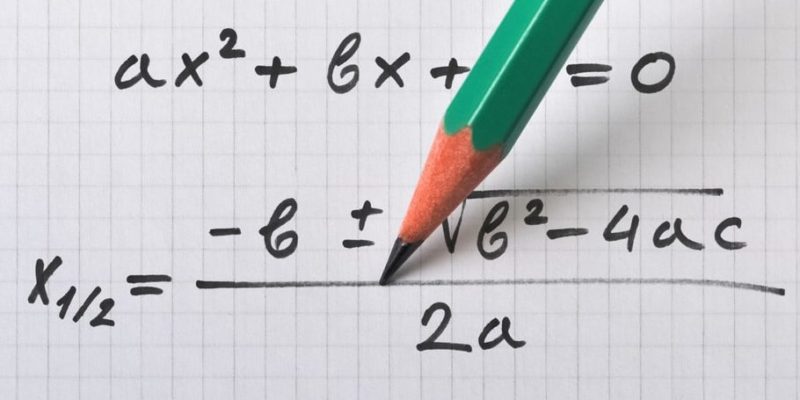
Algebra originated in the ancient civilizations of Mesopotamia and Egypt, where it was used to solve equations and arithmetic problems.
It continued in ancient Greece, where the Greeks used algebra to express equations and theorems, such as: Pythagorean Theorem
Mathematicians such as Euclid and Diophantus made important contributions to algebra, laying the groundwork for its later development.
In Europe, algebra was introduced during the Middle Ages through translations of Arabic works. Mathematicians such as René Descartes and Pierre de Fermat made important contributions to modern algebra, laying the groundwork for the development of calculus.
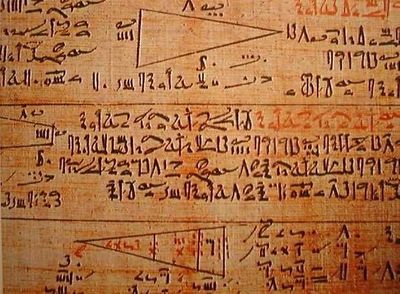
Elementary Algebra: Elementary algebra develops all the basic concepts of algebra. In arithmetic, quantities are expressed as numbers with specific values. That is, 30 expresses a single value, and to express another, a different number must be entered.
In algebra, a letter represents the value assigned to it by the individual, and therefore, it can represent any value. However, when a letter is assigned a specific value in a problem, it cannot represent a different value than the one assigned in the same problem. For example: 3x + 5 = 14. The value that satisfies the unknown in this case is 3, and this value is known as the solution or root.
Boolean Algebra: Boolean algebra represents two states or values (1 or 0) that indicate whether a device is open or closed. If it is open, it is conducting; otherwise (closed), it is not conducting.
This system facilitates the systematic study of the behavior of logic components. Boolean variables are the basis of programming thanks to the use of the binary system, which is represented by the numbers 1 and 0.
Linear Algebra: Linear algebra is primarily concerned with the study of vectors, matrices, and systems of linear equations. However, this type of algebra division extends to other areas such as engineering and computing, among others.
Finally, linear algebra dates back to 1843, when the Irish mathematician, physicist, and astronomer William Rowan Hamilton coined the term "vector" and introduced quaternions. It also dates back to the German mathematician Hermann Grassman, when he published his book "The Linear Theory of Extension" in 1844.
Abstract Algebra Abstract algebra is a branch of mathematics that studies algebraic structures such as vectors, fields, rings, and groups. This type of algebra can be called modern algebra, in which many of its structures were defined in the 19th century.
It was born with the aim of more clearly understanding the complexity of the logical statements on which mathematics and all natural sciences are based, and is currently used in all branches of mathematics.
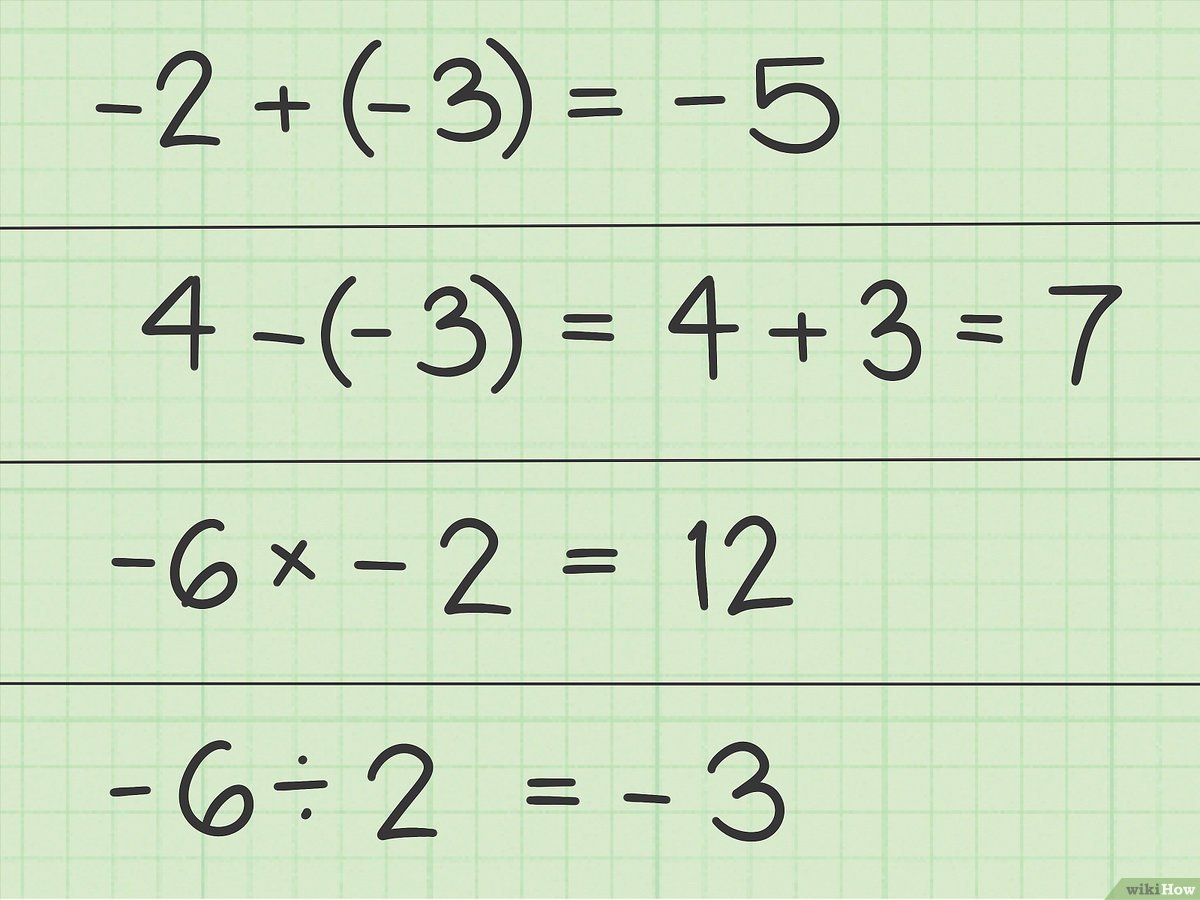
There are different types of expressions that are differentiated by the number of terms present. If there is one, it is called a monomial; if there are two, it is a binomial; if there are three, it is a trinomial. If there are more than three terms, it is known as a polynomial.
Numbers: Represent known values or constants.
Letters: Represent unknowns or variables.
Symbols: Represent the mathematical operations that must be performed with numbers and letters. The most common symbols are:
Addition (+)
Subtraction (-)
Multiplication (x)
Division (/)
Exponential multiplication (^)
Radicalization (√)
Signs: These are used to indicate the relationship between the terms of an expression. The most common signs are:
Positive sign (+)
Negative sign (-)
Basic algebra corresponds to the use of simple algebraic expressions as linear equations. The equations are of the type ax + by + cz..., where (a, b, c) are real numbers and the letters (x, y, z) correspond to variables, whose real values are unknown.
An expression like 2x + 3y = 0 can be read as: two times one value, plus three times another, equals zero. We don't know the exact values of these data (x & y), but we can deduce them; in this case, if we solve for y -2 / 3x = y. The value of y must, then, be equal to minus two-thirds of the value of x for this equation to equal zero.
This is a basic example of solving, substituting, and solving a simple algebraic equation.
Solving is the operation equivalent to knowing the value of one variable in terms of the other.
To solve, you must:
1. Move the term x or y to the other side of the equation. If this is adding, move it to the other side of the equation by subtracting, and vice versa.
2. Move the coefficients of y or x to the opposite side. If these are multiplying, move it by dividing; and if these are dividing, they go on to multiply
3. Interpret the result
Example: x + 3 = 6
1. x + 3 = 6.
2. x = 6-3.
3. x = 3
Suppose you have an algebraic expression that is a polynomial. This polynomial could be simpler if it were expressed as a smaller term.
Suppose you have the following expression:
3x^5 + 2x^5 - 3x^2 + 2x
The first thing you can do in this case is to add or subtract the common terms; in this case, there are two terms with the same power to the fifth.
If we add them up, we have:
3x^5 + 2x^5 = 5x^5
So, you have:
5x^5 - 3x^2 + 2x
Here you can see that all the elements have x. Therefore, in this case, you can extract an x that multiplies the entire equation. This x has to be the power of the smallest x in the equation. In this case it is x^1 or simply x.
The next thing is that, all terms containing an x must reduce their power by the value of the power of the smallest x; In this case, it's one.
We would have:
x(5x^(5-1) - 3x^(2-1) + 2x^(1-1))
But, x^0 is equal to 1. So the equation would be:
x(5x^4 - 3x + 2)
This new equation is the factored equation of 3x^5 + 2x^5 - 3x^2 + 2x
x(5x^4 - 3x + 2) = 3x^5 + 2x^5 - 3x^2 + 2x
Expansion is the opposite of factoring: here you're trying to make your equation bigger.
There are two possibilities: either two algebraic equations are multiplying, or the algebraic equation is raised to a power.
The simplest and most general rule when multiplying two algebraic equations is that the terms multiply by one.
EXAMPLE:
(2x + 3)(3y + 4x)
In this case, you must multiply 2x by each term of (3y + 4x) and, then, 3 by each term of (3y + 4x):
2x(3y) = 6xy
2x(4x) = 8x^2
3(3y) = 9y
3(4x) = 12x
Now, you just need to add the terms that are the result: 6xy + 8x^2 + 9y + 12x
If there are like terms, you must add or subtract them.
You may also need to perform basic operations like addition and subtraction. In that case, it's very simple: just add the terms that are equal.
If the terms have only x, they can be added, but a term with x and a term with y cannot be added. For example:
(2x + 3y - 4z) + (3xy - 2z)
In this case, there are only two terms that are equal in each equation, and they both have a z , so they are the only ones we can add:
-2z - 4z = -6z
Having added the 2 terms with z, we now have only one. The sum would be as follows:
2x + 3y + 3xy - 6z
As you can see, terms with combined xy values cannot be added together either, unless there are other terms with the same combined x,y,z values.
To give another example.
(2xy + 3y -4xz) + (3xy - 2z)
In this example, we have 3 terms with variables of x,y,z combined, these terms are:
2xy
4xz
3xy
But only two of them have the same combined variables: 2xy and 3xy
Therefore, we can only add these together. The equation would be as follows:
5xy + 3y - 4xz
Remember to check the answers to the open questions at the bottom of this page.
Once you click this button, the questions will close and you won't be able to change your answer.
We recommend visiting the following material for greater knowledge or understanding of the topic:
1. Algebra 2. Álgebra: Britannica 3. Algebra – Definition, Examples, Practice Problems, FAQs6. x = 5
5x - 8x = - 15
-3x = -15. (Negative signs are eliminated)
x = 15/3
x = 5
7. It studies vectors, matrices, and systems of linear equations, and is applied in areas such as engineering and computer science.
8. x = 1/4
4x + 1 = 2
4x = 2 - 1
4x = 1
x = 1/4
9. It is a simplified form of an algebraic expression in which common factors are extracted, making it easier to solve equations.
10. The terms must be similar, that is, have the same variables with the same exponents.
References:
1. De Enciclopedia Significados, E. (2024b, noviembre 11). Álgebra (Qué es, Características, Origen y Tipos). Enciclopedia Significados. https://www.significados.com/algebra/
2. Álgebra: definición, operaciones y ejercicios | StudySmarter. (s. f.). StudySmarter ES. https://www.studysmarter.es/resumenes/matematicas/numeros-y-algebra/algebra/
3. Admin. (2022, 6 septiembre). Algebra. BYJUS. https://byjus.com/maths/algebra/
4. Corry, & Leo. (2025, 7 mayo). Algebra | History, Definition, & Facts. Encyclopedia Britannica. https://www.britannica.com/science/algebra
5. Kumar, A., & Kumar, A. (2023, 12 agosto). What is Algebra? Definition, Basics, Examples, Facts. SplashLearn - Math Vocabulary. https://www.splashlearn.com/math-vocabulary/algebra/algebra
6. Find Y. (2024, 30 agosto). All of algebra explained in 15 minutes [Vídeo]. YouTube. https://www.youtube.com/watch?v=mza6QYH3oEw
7. mathantics. (2015, 22 mayo). Algebra basics: What is algebra? - Math antics [Vídeo]. YouTube. https://www.youtube.com/watch?v=NybHckSEQBI