
Previous Topic

Chemistry

Biology

Home

Math

Physics

Next Topic
Previous Topic
Chemistry
Biology
Home
Math
Physics
Next Topic
Geometry is a branch of mathematics that studies the properties, dimensions, and characteristics of figures on a plane and their relationships in space.
This discipline analyzes the shape, size, relative position, and metric properties of geometric objects such as points, lines, segments, angles, polygons, circles, and three-dimensional solids.
Geometry provides key tools and concepts for solving problems related to shape and structure. Therefore, it plays an essential role in diverse fields such as physics, architecture, engineering, cartography, and computer science.
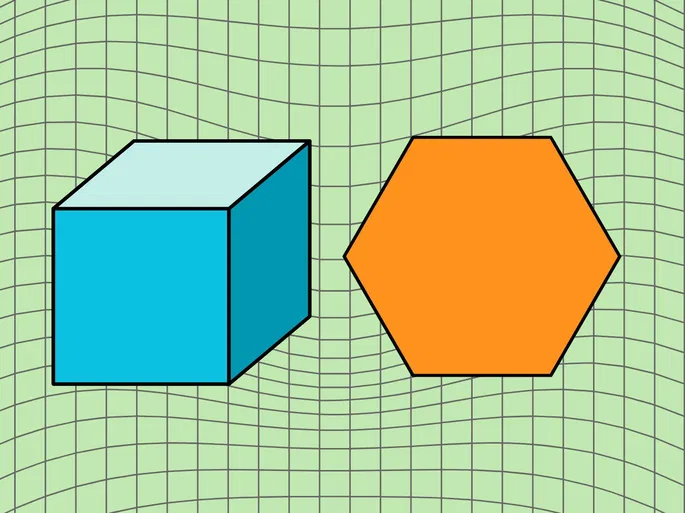
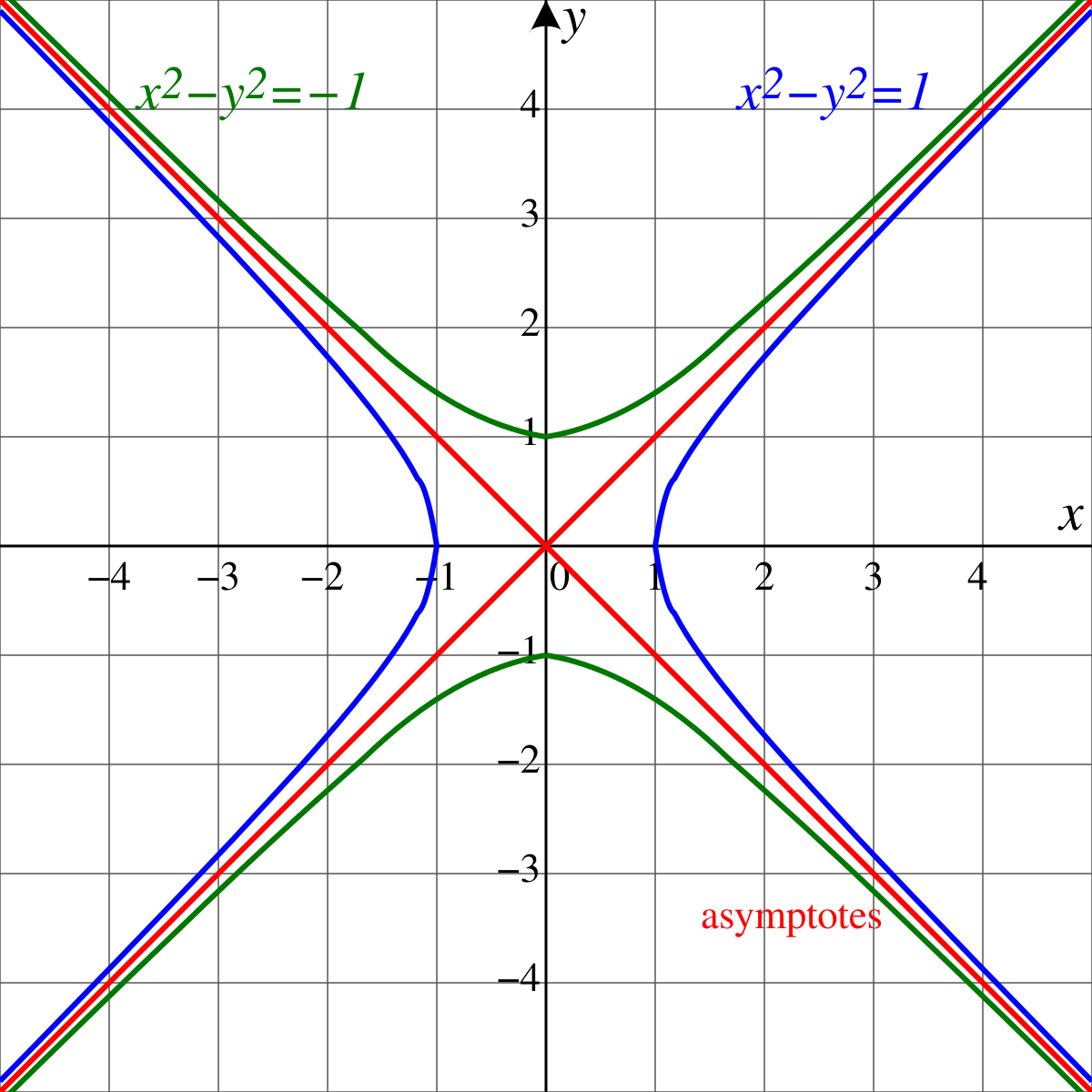
Analytical Geometry: Analytical geometry is the study and representation of geometric elements and figures using numerical and algebraic expressions in a coordinate system or Cartesian plane
It allows the representation of figures through formulas. This type of geometry is applied, for example, in Physics to represent elements such as vectors in a coordinate system.
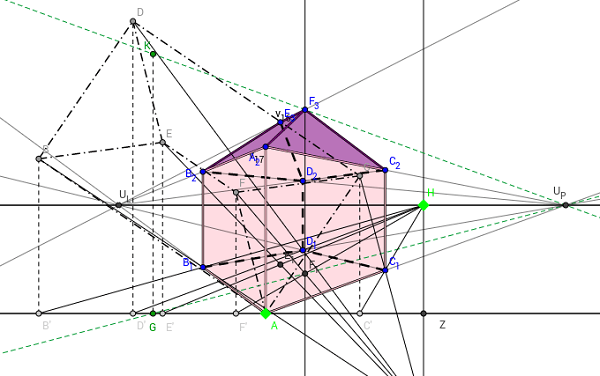
Descriptive geometry: Descriptive geometry is the study and graphic representation of figures through orthogonal projection on a plane. It allows us to identify and analyze the geometric properties and spatial relationships of figures. The geometric elements that comprise it are the point, the line , the plane, and the volume.
Euclidean geometry: Euclidean geometry is the study of the geometric properties of Euclidean spaces. It is also known as Euclidean geometry and sometimes as parabolic geometry. It is based on the postulates of the Greek mathematician Euclid. It encompasses plane geometry (two dimensions) and spatial geometry (three dimensions).

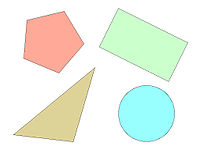
Plane geometry: Plane geometry is the branch of geometry that studies figures represented on a plane (in two dimensions: length and width).
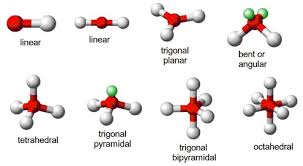
Spatial geometry: This branch deals with the study of three-dimensional figures, such as cubes, spheres, pyramids, etc. Unlike plane geometry, the height and depth of objects are also considered here.
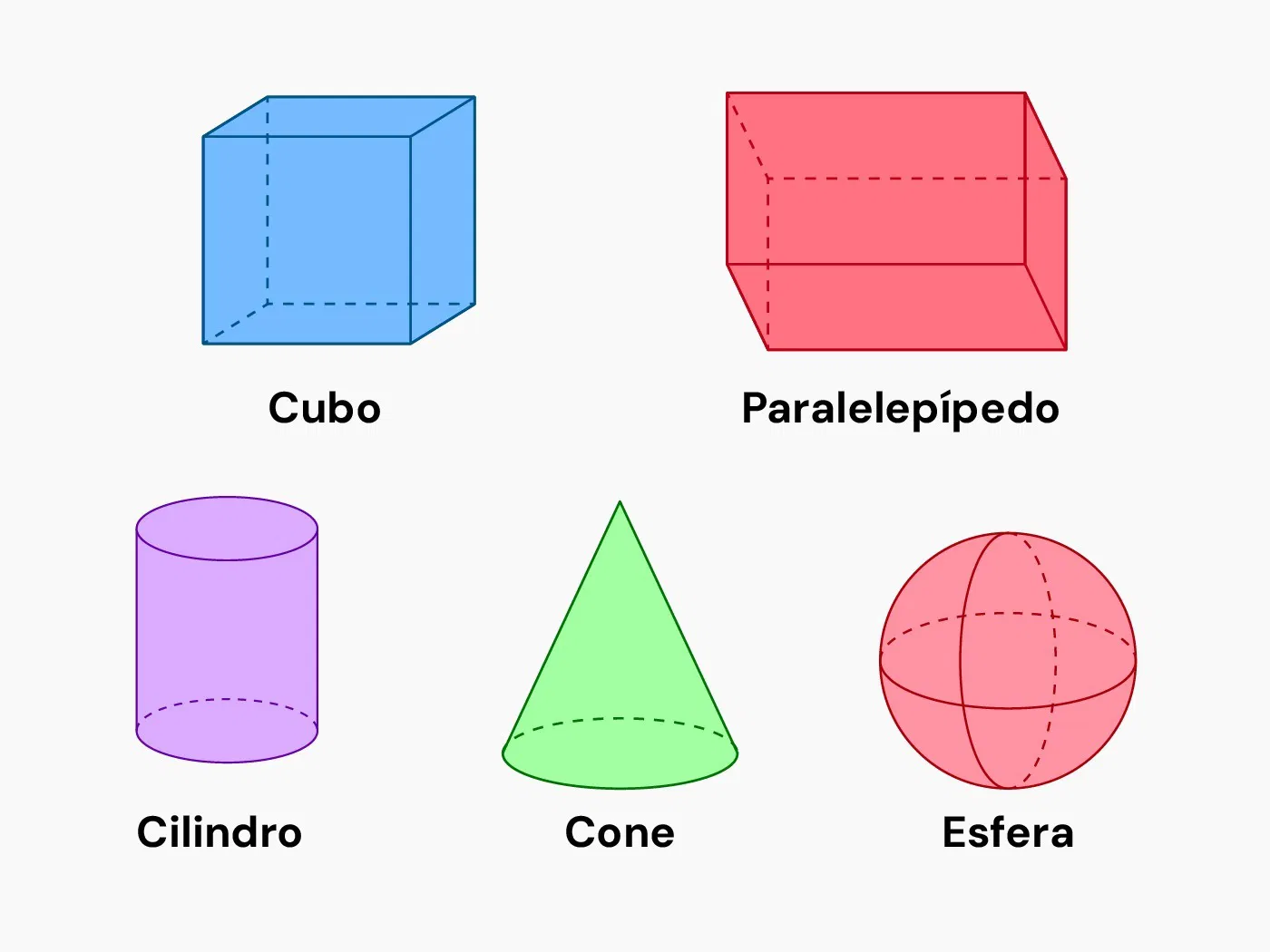
Molecular geometry:Molecular geometry is the study of the structure of the atoms that make up a molecule. It is also sometimes referred to as molecular structure. The arrangement of atoms determines the physical and chemical properties of a molecule.
Some examples of the geometric shapes a molecule can have are: linear, tetrahedral, and angular (for example, the water molecule).
The point: Is an element that does not contain area, volume, or any other characteristic other than a location in space. Many times, in geometry, these points will be identified with capital letters.
The straight line: Is a line that has neither area nor volume. This line passes through several points in space. An important characteristic of a straight line is that it is continuous or does not contain any gaps.
The plane: Is a surface, an area, similar to the floor of your house (for example). Two relevant characteristics of the plane are that, like a line, it has no gaps and is smooth. However, the plane exists in at least two dimensions.
A space: Is the most general form of classical geometry. This is basically a volume. Therefore, it lives in three dimensions.
Vectors are objects that have direction and magnitude and have the following characteristics:
- A vector has a start point and an end point, its direction is indicated by an arrow.
- The start and end points of a vector have coordinates, which tell us where the start and end of the vector are.
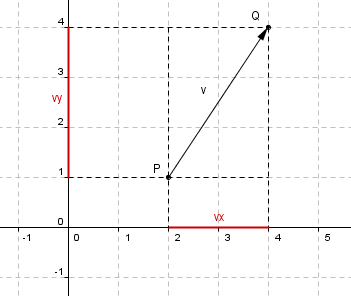
A vector in two-dimensional space. The initial point is in the dimensions x=2, y=1 (2,1) and is called P; the final point is called Q and has coordinates x=4, y=4 (4,4). The direction of the vector marked by the arrow is from P to Q.
The vector must extend from the initial point to the point you want to point to, or more formally, reference.
The magnitude of the vector in two dimensions is given by the following formula:
v = √x^2 + y^2
If your vector is in three dimensions, then you must add the z coordinate to the square, so it now becomes:
v = √x^2 + y^2 + z^2
Vectors are very useful because they allow you to locate objects in a Cartesian coordinate system.
Space needs a reference point, a place from which you can measure distances; We can call this point the origin and denote it as "O"
In two dimensions, this would be 0,0
However, since in addition to having a reference point, you need something else to give you a point of comparison to know directions like up and down, left or right, for this you need the coordinate axes.
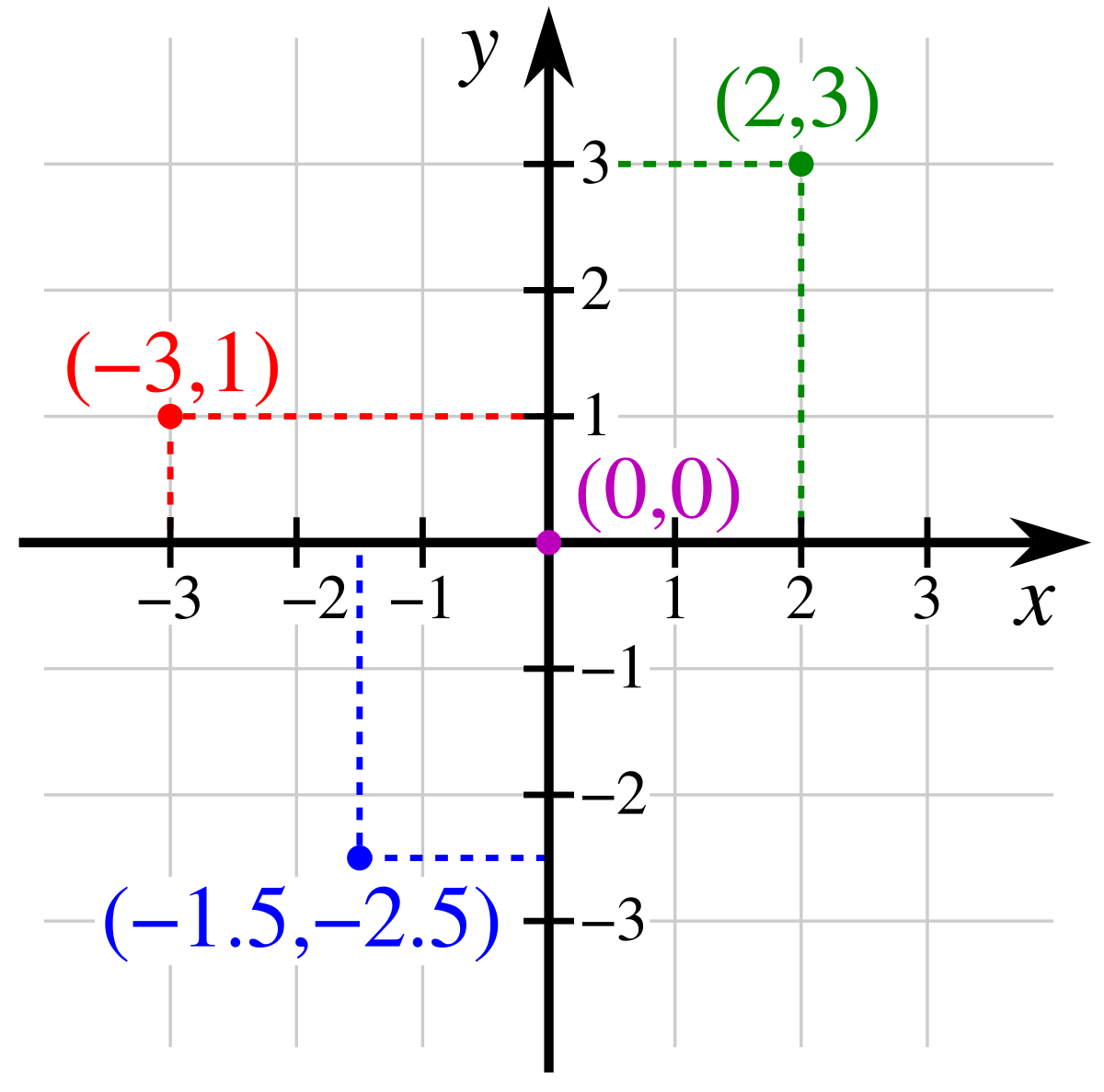
Here the origin is your reference point and is where the x and y
axes intersect.The axes are precisely the dark lines. The horizontal line is the x-axis, and the vertical line is the y-axis.
Both lines are perpendicular to each other. The axes also have marks at fixed distances from each other; these are used to measure distances from the origin.
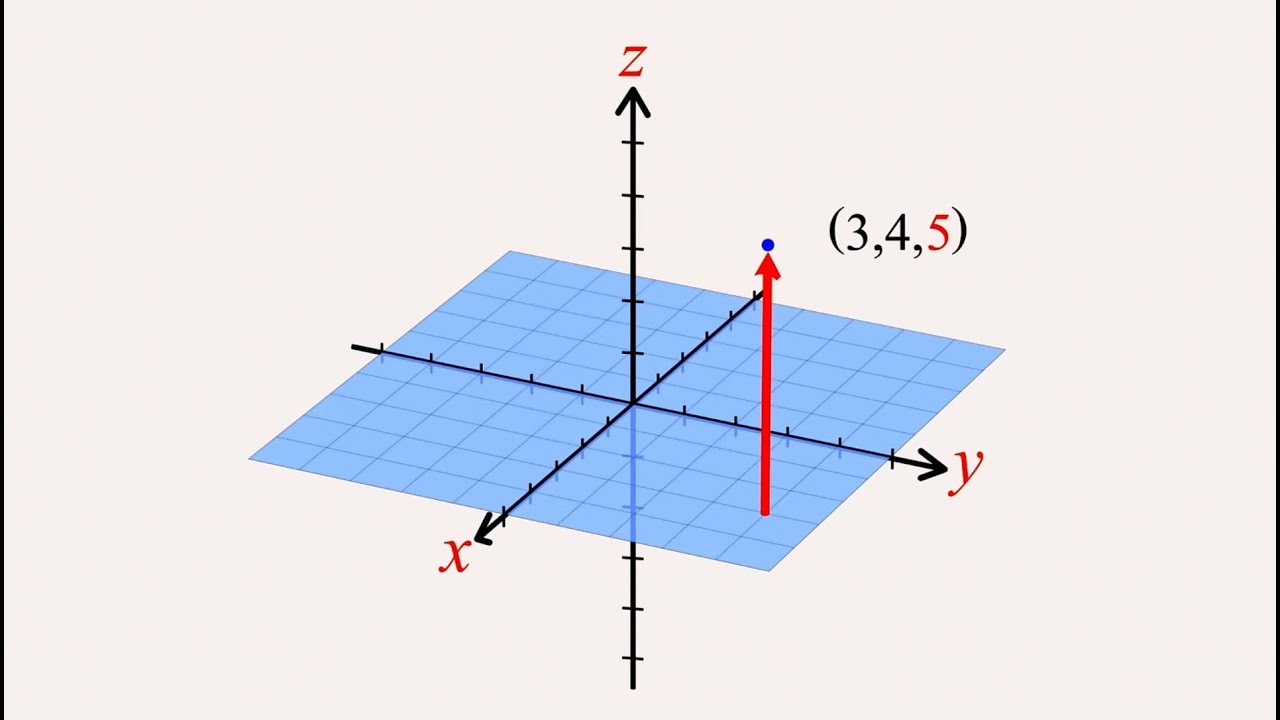
The three-dimensional coordinate system you are familiar with is a Cartesian system. In this case, it is a three-dimensional system. The dimensions of the system are: x, y, z.
To study the distance between two points, let's consider the following figure.
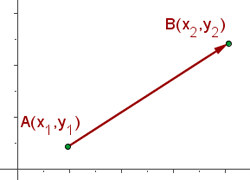
In the figure we can find two points A = (x1,y1) and B = (x2,y2) on the Cartesian plane joined by a vector.
The magnitude of the vector, which joins the points, is the value that represents the distance between the points.
The formula to obtain this distance is:
d = √(x2 - x1)^2 + (y2 - y1)^2
For example. If we use the following example A(2,1), B(-3,2).
First we must modify the formula, with the corresponding values.
d = √(-3 - 2)^2 + (2 - 1)^2
Later, we'll solve the parentheses.
d = √(-5)^2 + (1)^2
Now, we'll solve the exponents.
d = √ 25 + 1
Finally, we add the numbers inside the square root.
d = √26
If the result has an integer square root (example: √25 = 5), solve the square root. Otherwise, it would have to be left as root terms, as in this case.
Remember to check the answers at the bottom of this page.
Draw coordinate points. Click to go to the activity.
We recommend visiting the following material for greater knowledge or understanding of the topic:
1. What is Geometry? 2. Geometry: Britannica 3. Geometry1. (1,6)
We know that the coordinates of a vector are obtained by subtracting the initial point from the final point
B-A = AB
(3 - 2, 5 + 1) = (1,6)
2. x √17
The formula for the distance between two points is:
d(AB) = √(x2 - x1)^2 + (y2 - y1)^2
We have:
d(AB) = √(-2 + 6)^2 + (0 - 1)^2
d(AB) = √(4)^2 + (-1)^2
d(AB) = √16 + 1
d(AB) = √17
References:
1. De Enciclopedia Significados, E. (2024, 14 agosto). Geometría (Qué es, Historia y Tipos). Enciclopedia Significados. https://www.significados.com/geometria/
2. Vaia. (s. f.). https://app.vaia.com/studyset/9083255/summary/56145286
3. Marta. (2025, 1 enero). Ejercicios resueltos de vectores. Material Didáctico - Superprof. https://www.superprof.es/apuntes/escolar/matematicas/analitica/vectores/ejercicios-de-vectores.html
4. Depardieu, M. (2025, 26 enero). What is Geometry? UPchieve Free Online Tutoring And College Counseling. https://upchieve.org/blog/2019/7/22/what-is-geometry#:~:text=Geometry%20is%20defined%20as%20%E2%80%9Ca,%2C%20surfaces%2C%20and%20solids.%E2%80%9D
5. Heilbron, & J.L. (2025b, abril 13). Geometry | Definition, History, Basics, Branches, & Facts. Encyclopedia Britannica. https://www.britannica.com/science/geometry
6. Admin. (2023a, enero 24). Geometry. BYJUS. https://byjus.com/maths/geometry/
7. The Organic Chemistry Tutor. (2018b, septiembre 5). Introduction to Geometry [Vídeo]. YouTube. https://www.youtube.com/watch?v=302eJ3TzJQU
8. John Jung - The Admission Hackers. (2020, 5 agosto). [March SAT Math] Everything you need to know - Geometry Full review [Vídeo]. YouTube. https://www.youtube.com/watch?v=3mjs5_0uWAk
9. Draw Stuff Real Easy. (2012, 15 junio). What’s the point of Geometry? - Euclid explains it nice and easy! [Vídeo]. YouTube. https://www.youtube.com/watch?v=_KUGLOiZyK8