
Previous Topic

Chemistry

Biology

Home

Math

Physics

Next Topic
Previous Topic
Chemistry
Biology
Home
Math
Physics
Next Topic
Trigonometry is the measurement of triangles. Trigonometry is part of the science of mathematics and studies the trigonometric ratios of sine, cosine, tangent, cotangent, secant, and cosecant.
Trigonometry is used wherever precise measurements are required and is applied to geometry, especially to the study of spheres within spatial geometry. Among the most common uses of trigonometry are the measurement of distances between stars or between geographical points.

The Egyptians used trigonometry in an early form to build their pyramids.
Scholars in ancient Egypt and Babylon were already aware of theorems about the measurement of similar triangles and the ratios of their sides.
Babylonian astronomers are known to have recorded the motions of the planets and eclipses. The Egyptians, two thousand years before Christ, already used trigonometry in a primitive form to build their pyramids.
The foundations of modern trigonometry were developed in Ancient Greece, but also in India and by Muslim scholars. Scholars of ancient trigonometry included Hipparchus of Nicaea, Arybhata, Varahamihira, Brahmagupta, Abu'l-Wafa, among others.
The first use of the "sine" function dates back to the 8th century BC in India. The person who introduced the analytical treatment of trigonometry in Europe was Leonhard Euler. They were then known as "Euler's formulas."
They were based on the correspondence that exists between the lengths of the sides of a triangle since they maintain the same proportion. If a triangle is similar, then the relationship between the hypotenuse and a leg is constant. If we observe that a hypotenuse is twice as long, then the legs will be twice as long.
Three units are used to measure angles:
The radian is used primarily in mathematics.
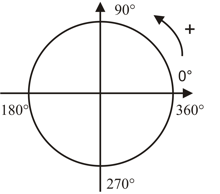
The sexagesimal degree is most commonly used in everyday life.
Trigonometry is defined in certain functions that are applied in various fields to measure the relationship between the sides and angles of a right triangle or a circle. These functions are sine, cosine, and tangent. Inverse trigonometric ratios can also be performed, namely: tangent, secant, and cosecant.
To perform these operations, it is necessary to keep certain concepts in mind. The side opposite the right angle is called the hypotenuse, which is the longest side of the triangle. The opposite leg is the one on the side opposite the angle in question, while the adjacent leg is the one next to it.
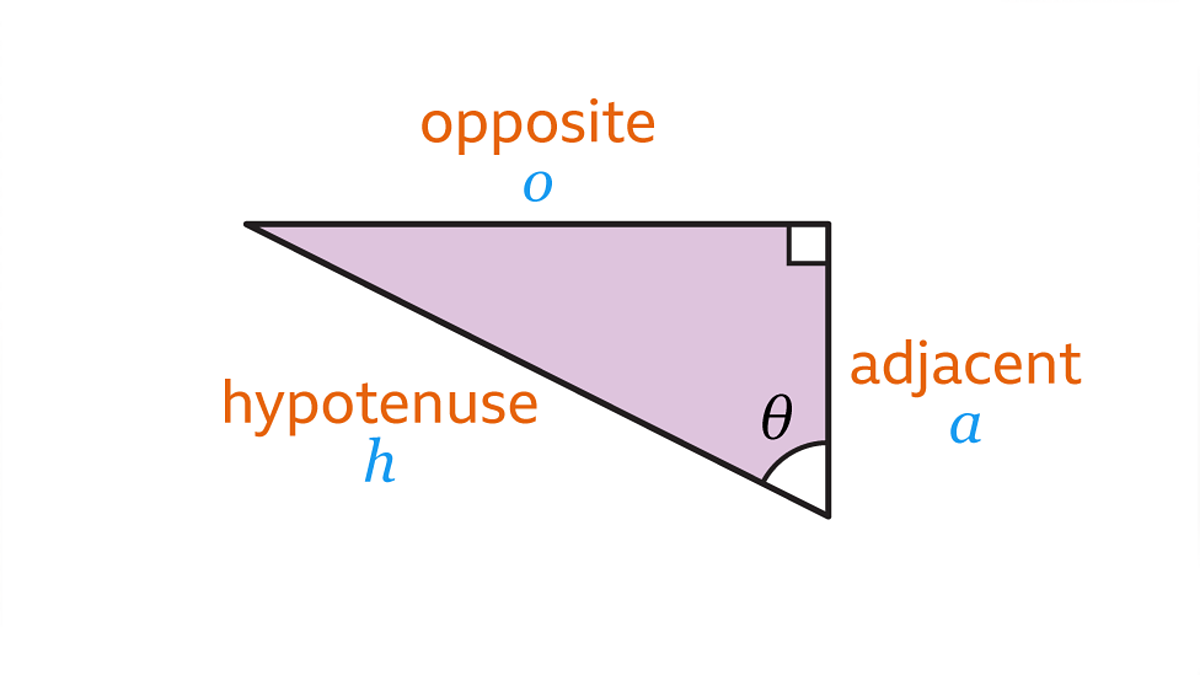
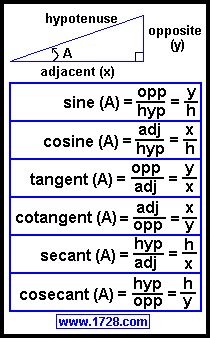
To obtain the sine of a given angle, divide the length of the opposite leg by the length of the hypotenuse (i.e., opposite leg by hypotenuse: a/h).
The cosine is obtained from the ratio of the length of the adjacent leg to the hypotenuse (adjacent leg by hypotenuse: a/h).
To obtain the tangent, divide the length of both legs (i.e., perform the following division: o/a).
For the cotagent function, the length of the adjacent leg is divided by the opposite leg (understood as: a/o).
For the secant function, the length of the hypotenuse is related to the adjacent leg (that is, h/a).
To determine the cosecant function, the length of the hypotenuse is divided by the opposite leg (thus obtaining: h/o).
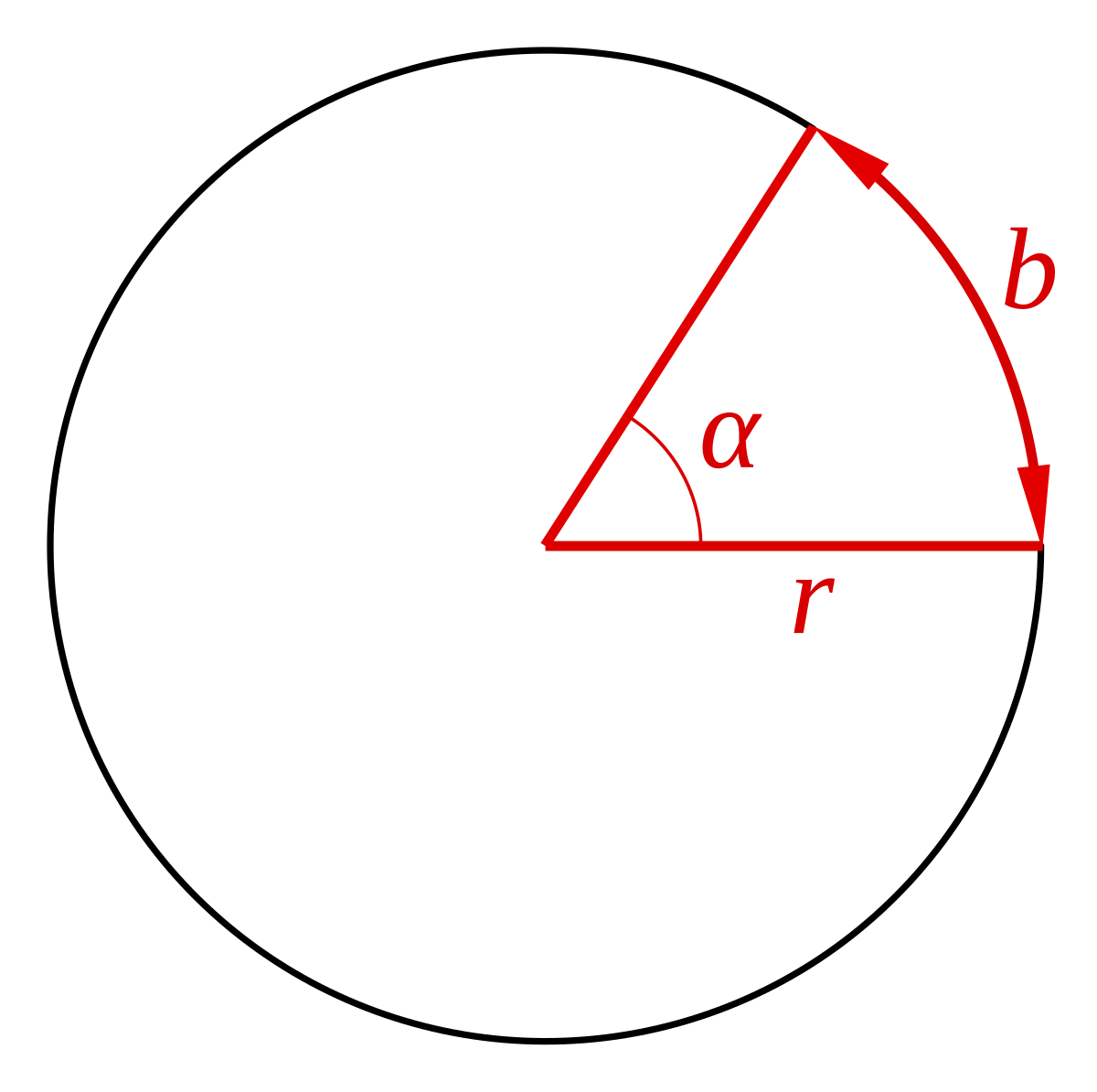
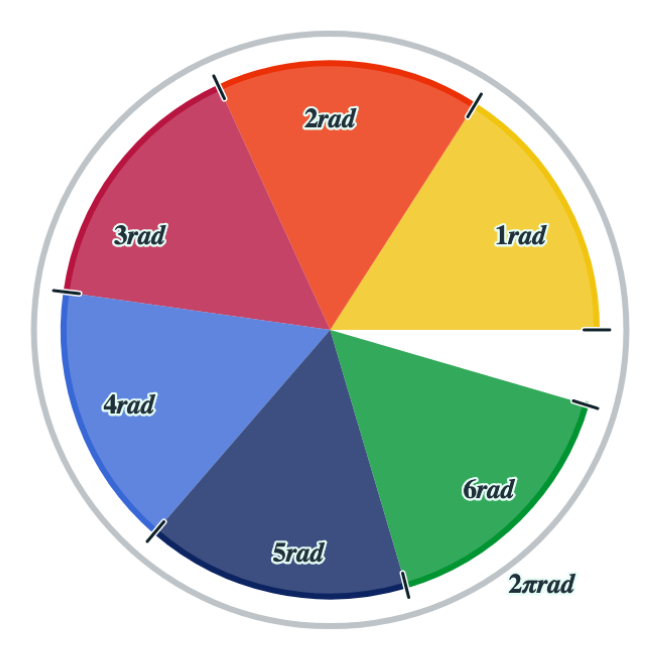
Radians are the unit of measurement defined by the International System of Units and are defined as the arc of a circle whose length is equal to its radius.
The symbol used to denote an angle in radians is rad, for example: 1rad Radians are widely used in mathematics and science.
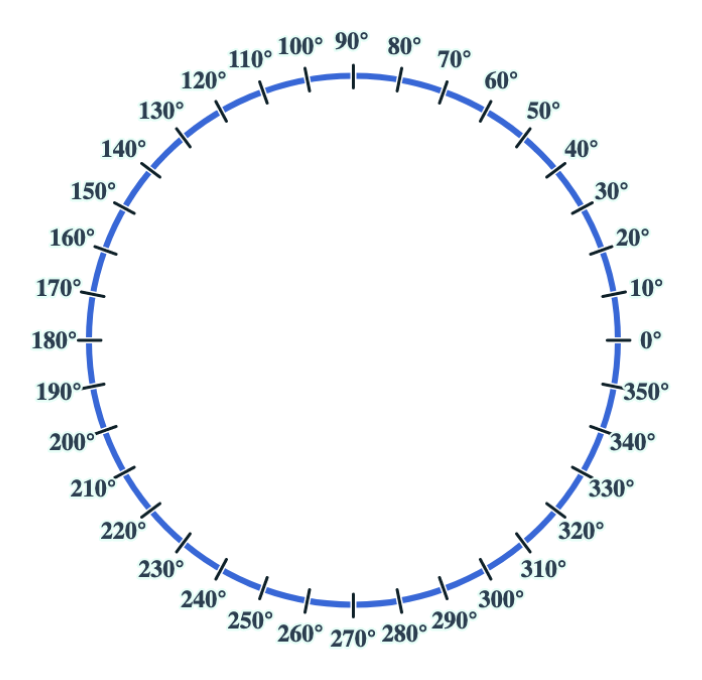
Degrees consist of dividing a circle into 360 equally sized parts, such that each of these parts is the size of one degree.
The symbol used to denote an angle in degrees is °, for example 360°
Converting from radians to degrees is very simple. You need to multiply the degree by π/180.
In other words, if you want to know how much 87° is in rad, you need to multiply 87 * π/180.
87 * 0.1745 = 1.518.
That is, 87° = 1.518rad
1° = 0.01745 rad
57.29° = 1 rad
Remember to review the answers to the open-ended questions at the bottom of this page.
Once you click this button, the questions will close and you will not be able to change your answer.
We recommend visiting the following material for greater knowledge or understanding of the topic:
1. Trigonometry 2. Trigonometry: Britannica6. 5.236 rad | 300° * π/180 | 300° * 0.01754 = 5.236 rad
7. 0.6 cm | opposite/hypotenuse | 6/10 = 0.6cm
8. 2.6 cm | hypotenuse/adjacent | 13/5 = 2.6cm
9. 114.59° | 2 rad * 180/π | 2 rad * 57.32 = 114.59°
10.1.5708 rad | 90° * π/180 | 90° * 0.01754 = 1.5708 rad
References:
1. Equipo editorial, Etecé. (2022, 13 junio). Trigonometría - Concepto, historia y principales conceptos. Concepto. https://concepto.de/trigonometria/
2. Grados y radianes. (s. f.). https://arquimedes.matem.unam.mx/mati/actividades/actividad_grados_y_radianes/
3. Admin. (2022a, agosto 22). Trigonometry. BYJUS. https://byjus.com/maths/trigonometry/
4. Maor, Eli, Barnard, & Walter, R. (1998, 20 julio). Trigonometry | Definition, Formulas, Ratios, & Identities. Encyclopedia Britannica. https://www.britannica.com/science/trigonometry
5. Mathematical Visual Proofs. (2023, 25 agosto). Trig Visualized: One Diagram to Rule them All (six trig functions in one diagram) [Vídeo]. YouTube. https://www.youtube.com/watch?v=dUkCgTOOpQ0
6. Find Y. (2025, 29 enero). All of trigonometry explained in 12 minutes [Vídeo]. YouTube. https://www.youtube.com/watch?v=erQFfES-njE
7. The Organic Chemistry Tutor. (2017b, julio 25). Trigonometry for beginners! [Vídeo]. YouTube. https://www.youtube.com/watch?v=PUB0TaZ7bhA
8. Dennis Davis. (2019, 22 abril). Trigonometry Concepts - Don’t memorize! Visualize! [Vídeo]. YouTube. https://www.youtube.com/watch?v=mhd9FXYdf4s