
Previous Topic

Chemistry
Biology

Home

Math
Physics

Next Topic
Previous Topic
Chemistry
Biology
Home
Math
Physics
Next Topic
A chemical bond is the combination of atoms to form chemical compounds and give stability to the resulting product. In this process, atoms can share or give up electrons from their outermost shell to join together and create a new homogeneous substance.
When a chemical bond occurs, the structure and characteristics of the atoms do not change; there is only a sharing of electrons. This means, for example, that when the chemical bond of water (H2O) forms, its elements (oxygen and hydrogen) remain the same.
The environment around us is the result of multiple chemical bonds that provide matter with both physical and chemical properties. This is a product of the force generated by atoms when they combine and form bonds, as these small particles are much more stable together than alone.
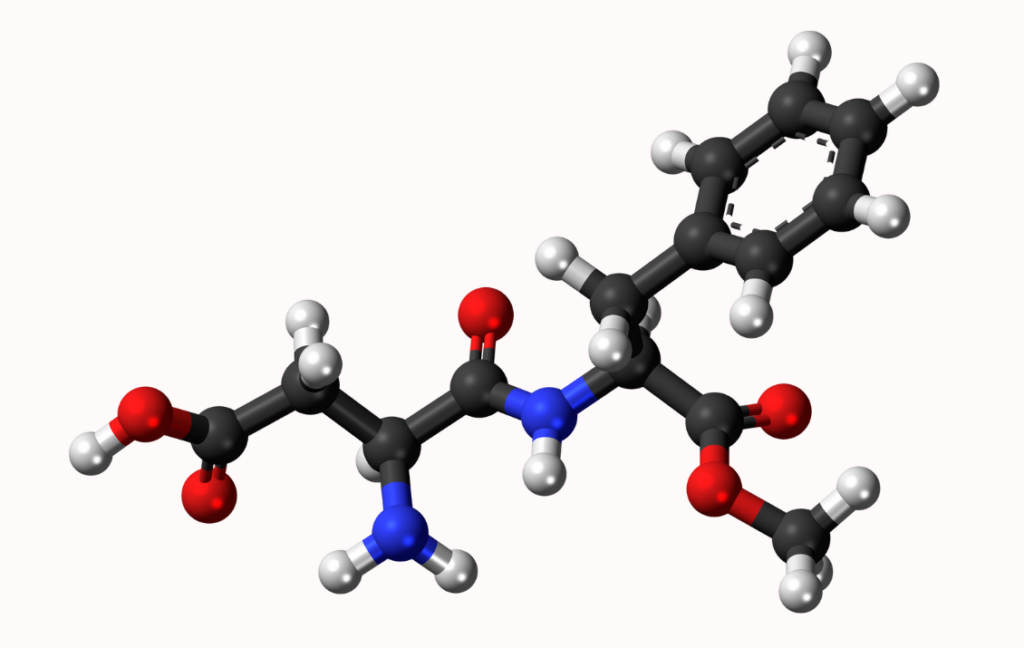
Every atom is composed of a nucleus with positively charged protons and neutrally charged neutrons, surrounded by an outer layer known as the electron cloud, the latter of which are negatively charged.
Opposite charges attract each other, both within the same atom and between other atoms. Thanks to this attraction, chemical bonds are formed between different elements.
Atoms complete their electrical charges by exchanging electrons: they give up, accept, or share these particles to achieve a stable electronic configuration that involves lower energy consumption.
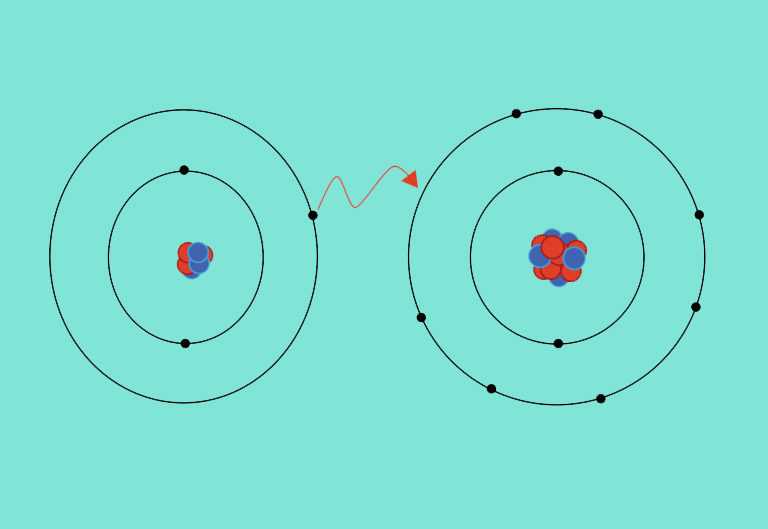
In 1917, American physical chemist Gilbert Lewis formulated the octet rule, which explains how atoms of different chemical elements combine to form bonds.
This theory states that the ions of the elements in the periodic table complete their final energy levels with eight electrons. In this way, molecules achieve stability at the level of their electronic structure.
Elements with high electronegative charges gain electrons until they reach the octet, while those with low electronegativity usually lose them to achieve the same goal.

Chemical bonds can be of three types:
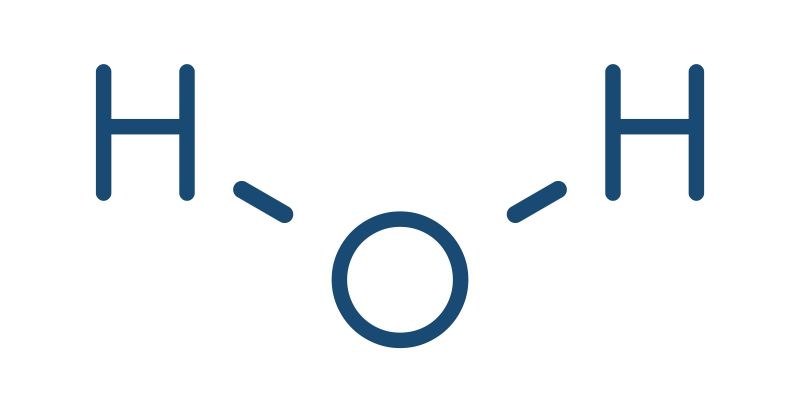
1. Covalent: This occurs when non-metallic atoms share electrons. In this type of bond, electrons move between the atoms, giving rise to polar covalent bonds (when they share electrons unequally) and non-polar covalent bonds (when the number of electrons is distributed equally).
Example: Water (H2O), formed by two hydrogen atoms and one oxygen atom, whose bond is determined because each hydrogen atom shares an oxygen atom.
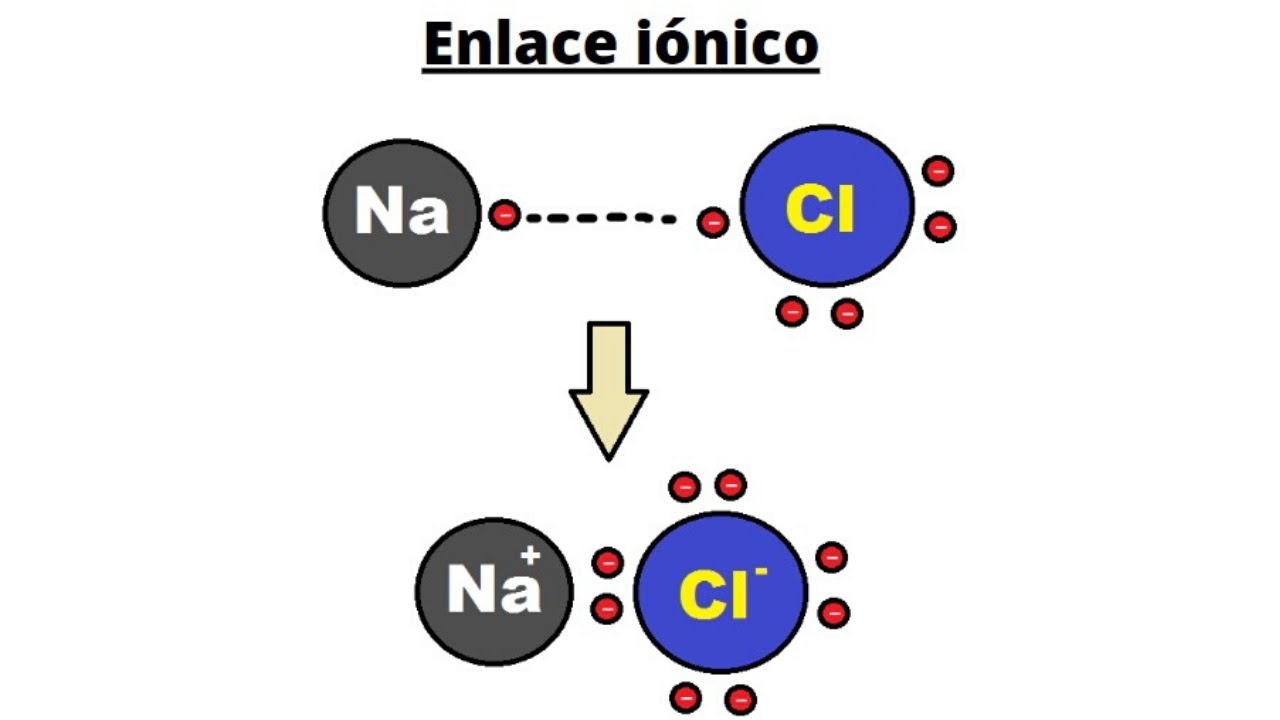
2. Ionic: Occurs when metallic and non-metallic atoms bond, transferring an electron charge between them. As a result, both negatively charged ions (anions) and positively charged ions (cations) are formed, and an attraction is generated between their opposite charges.
Examples: Sodium chloride (NaCl), which combines one chlorine atom and one sodium atom; while the former has seven electrons, the latter has one. When forming the ionic bond, sodium gives up its electron to chlorine, thus fulfilling the octet law.
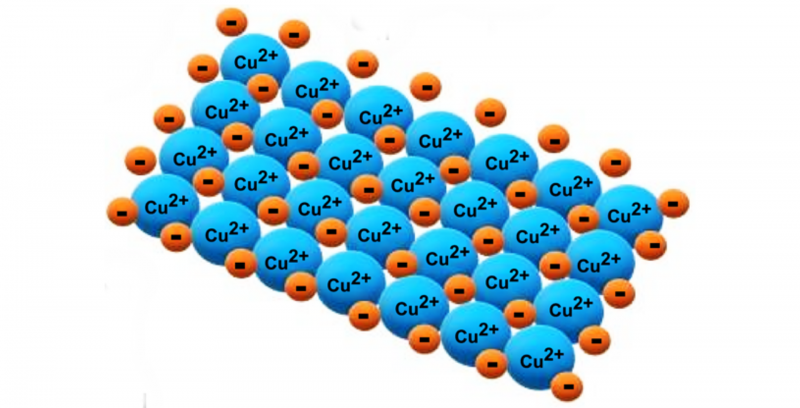
3. Metallic: These are bonds that form between metal atoms, whose atomic nuclei are packed together and surrounded by their electrons like a cloud. It is a type of strong bond that is distributed in a network-like manner.
All pure metallic elements are made up of metallic bonds, for example: gold (Au), iron (Fe), aluminum (Al), etc.
Some of the main characteristics of chemical bonds are:
1. They keep atoms together within chemical molecules.
2. The strength of a chemical bond is determined by the difference in electronegativity (the greater the difference, the greater the force of the electrons attracted between atoms).
3. Generally, the number of electrons is even.
4. Covalent bonds can exist in gaseous, solid, and liquid states.
5. Some covalent bonds are soluble in water, others in organic solvents.
6. Acid covalent bonds are electrically conductive in the presence of an aqueous solution (the rest of the covalent bonds are not good conductors of electricity), and ionic bonds are electrically conductive when dissolved in water or when melted.
7. Ionic bonds have high melting and boiling points.
8. Metallic bonds are good conductors of heat and electricity, occur in the solid state, and are highly malleable.
Methane (CH4) Covalent Bond
Ammonia (NH3) Covalent Bond
Glucose (C6H12O6) Covalent Bond
Potassium iodide (KI) Ionic Bond
Calcium carbonate (CaCO3) Ionic Bond
Magnesium oxide (MgO) Ionic Bond
Remember to check the answers to the open questions at the bottom of this page.
6. When two non-metallic atoms are separated by a distance smaller than the sum of the radii of the neutral atoms, they may be covalently bonded.
7. In a solution of phenol in alcohol (C6H5OH, C2H5OH), intermolecular attractions are weaker than in liquid air (N2, O2).
8. Considering the molecules HF, ICl and IBr, the intermolecular (bipolar) attraction that exists in each case follows this order: IBr > ICl > Hf.
Once you click this button, the questions will close and you won't be able to change your answer.
Co2; CCl4; N2; Li2O; PH3; Hg-Au.
SO2; MgO; K2O; P2O5; N2O3; Cl2O5.
We recommend visiting the following material for further knowledge or understanding of the topic:
1. The Octet Rule 2. Chemical Bonding 3. Chemical Bonds: Khanacademy9. Co2: Covalent; CCI4: Covalent; N2: Covalent; Li2O: Ionic; PH3: Covalent; Hg-Au: Metallic.
10. SO2: Covalent; MgO: Ionic; K2O: Ionic; P2O5: Covalent; N2O3: Covalent; Cl2O5: Covalent.
References:
1. Enlaces químicos, qué son, tipos y características - Ferrovial. (2022, 2 noviembre). Ferrovial. https://www.ferrovial.com/es/stem/enlaces-quimicos/
2. Ejercicios: enlace químico e interacciones moleculares – Aprendizaje U. Chile. (s. f.). https://aprendizaje.uchile.cl/recursos-para-aprender-ciencias-basicas-y-matematicas/profundiza/ejercicios-enlaceq/
3. Libretexts. (2023, 30 enero). The Octet rule. Chemistry LibreTexts. https://chem.libretexts.org/Bookshelves/Physical_and_Theoretical_Chemistry_Textbook_Maps/Supplemental_Modules_(Physical_and_Theoretical_Chemistry)/Electronic_Structure_of_Atoms_and_Molecules/Electronic_Configurations/The_Octet_Rule
4. Atkins, & W, P. (2025, 24 marzo). Chemical bonding | Definition, Types, & Examples. Encyclopedia Britannica. https://www.britannica.com/science/chemical-bonding
5. Khan Academy. (s. f.). https://www.khanacademy.org/science/ap-biology/chemistry-of-life/introduction-to-biological-macromolecules/a/chemical-bonds-article
6. CrashCourse. (2013b, julio 16). Atomic Hook-Ups - Types of Chemical Bonds: Crash Course Chemistry #22 [Vídeo]. YouTube. https://www.youtube.com/watch?v=QXT4OVM4vXI
7. The Organic Chemistry Tutor. (2016, 22 agosto). Introduction to Ionic Bonding and Covalent Bonding [Vídeo]. YouTube. https://www.youtube.com/watch?v=S_k0kr2eZSQ
8. Whats Up Dude. (2017, 2 noviembre). Types of chemical bonds - What are chemical bonds - covalent bonds and ionic bonds - What are ions [Vídeo]. YouTube. https://www.youtube.com/watch?v=AE5QcL4VfH4