
Previous Topic
Chemistry
Biology

Home

Math
Physics

Next Topic
Previous Topic
Chemistry
Biology
Home
Math
Physics
Next Topic
An acid is a chemical substance capable of transferring protons (H+) to another chemical substance.
A base is a chemical substance capable of absorbing protons (H+) from another chemical substance.
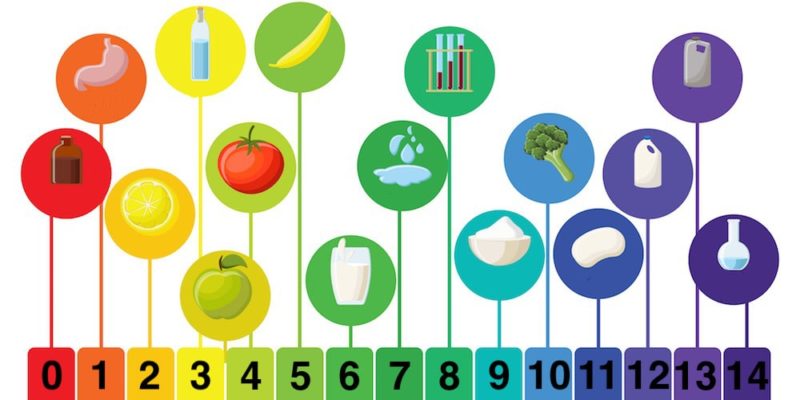
Substances with a pH less than 7 are acids, and those with a pH greater than 7 are bases. Substances with a pH of 7 are neutral.
There are two fundamental theories to explain what acids and bases are:
An acid is a substance that gives up protons (H+) in aqueous solution. That is, it is a neutral substance that, when dissolved in water, dissociates into its ions according to the following representative reaction:
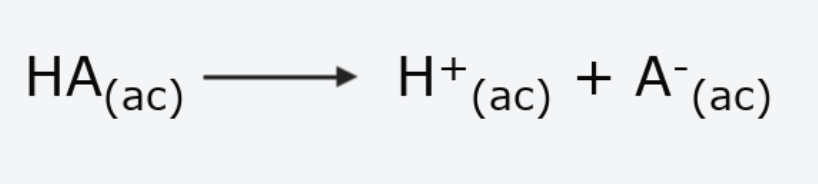
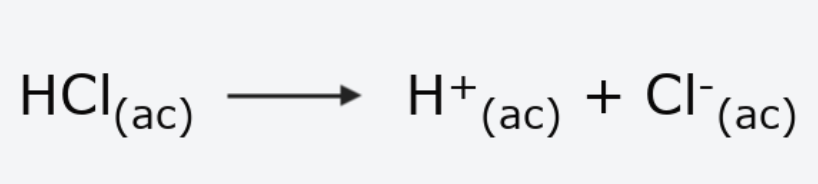
For example: hydrochloric acid (HCl)
A base is a substance that releases OH– ions in aqueous solution. For example: sodium hydroxide (NaOH)

This theory has its limitations, as it claims that these compounds are only defined in aqueous solution and not in other media. Furthermore, it fails to explain compounds such as ammonia (NH3), which is a base, but because it lacks OH– in its composition, it does not meet the Arrhenius definition of an acid and base.
For all these reasons, a new theory was needed that would better explain the concepts of acid and base. So, Brönsted and Lowry later developed a new theory, which includes Arrhenius's principles but is not limited to aqueous solution and is therefore much broader.
According to this theory, an acid is a chemical substance capable of donating protons (H+) to another chemical substance, and a base is a chemical substance capable of absorbing protons (H+) from another chemical substance.
According to this theory, an acid-base reaction is an equilibrium that can be expressed as:
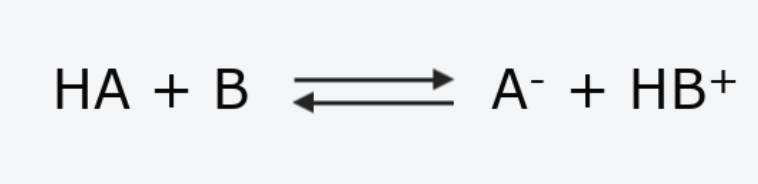
Where HA behaves as an acid, since it gives up an H+ proton to become A–. On the other hand, B behaves as a base, since it acquires an H+ proton to become HB+.
Some substances can behave as both acids and bases at the same time and are said to be amphoteric. This depends on the medium they are in or with what they react. An example of this type of substance is water:

In the first equation, water gains an H+ proton, behaving like a base and becoming H3O+. Whereas in equation (2), water gives up an H+ proton, behaving like an acid and becoming OH–.
Apparently, in both theories, acids and bases have different proportions of hydrogen ions (H+). This determines its acidity (in the case of acids) or its alkalinity or basicity (in the case of bases).
pH is the quantity used to measure the acidity or alkalinity of a solution; that is, it indicates the concentration of hydrogen ions present in it.
The lower the pH of a substance, the greater its degree of acidity. For example, pure HCl has a pH close to 0. On the other hand, the higher the pH of a substance, the greater its degree of alkalinity. For example, caustic soda has a pH of 14.
Both acids and bases can exist as liquids, solids, or gases. On the other hand, they can exist as pure or diluted substances, retaining many of their properties.
The difference in pH is the most noticeable characteristic of each. When the pH value of a compound reaches one of its extremes, it means that this compound is highly dangerous for most matter, both organic and inorganic.
Acids and bases have different physical characteristics:
They have a sour taste (for example: acid present in various citrus fruits).
They are highly corrosive and can cause chemical burns to the skin or respiratory damage if their gases are inhaled.
They are good conductors of electricity in aqueous solutions.
They react with metals to produce salts and hydrogen.
They react with metal oxides to form salt and water.
They have a characteristic bitter taste.
They are good conductors of electricity in aqueous solutions.
They are skin irritants: they dissolve cutaneous fat and can destroy organic matter due to their caustic effect. Breathing them is also dangerous.
They have a soapy feel.
They are soluble in water.
The neutralization reaction or (acid-base reaction) is a chemical reaction that occurs when these two types of compounds are mixed , producing a salt and a certain amount of water in return. These reactions are usually exothermic (generate heat), and their name comes from the fact that the properties of the acid and base cancel each other out.
To classify neutralization reactions, it is important to know the types of acids and bases.
Strong acid: An acid that, when in aqueous solution, is completely ionized, that is, it is completely transformed into the ions that make up its molecule. For example: HCl(aq), HBr(aq), H2SO4(aq).
Strong base: A base that, when in aqueous solution, is completely ionized, that is, it is completely transformed into the ions that make up its molecule. For example: NaOH(aq), LiOH(aq), KOH(aq).
Weak acid: An acid that, when in aqueous solution, is partially ionized, that is, it is not completely transformed into the ions that make up its molecule. Therefore, the concentration of ions in the solution of this type of acid is lower than in a strong acid. For example: citric acid, carbonic acid (H2CO3)
Weak base: A base that, when in aqueous solution, partially ionizes. That is, it does NOT completely transform into the ions that make up its molecule. Therefore, the concentration of ions in a solution of this type of base is lower than in a strong one. For example: ammonia (NH3), ammonium hydroxide (NH4OH)
Neutralization reactions can occur in four ways, depending on the properties of their reactants:
A strong acid and a strong base. The more abundant reactant will remain in solution relative to the other. The pH of the resulting solution will depend on which reactant is present in greater proportion.

A weak acid and a strong base. The result is a solution with a basic pH; the base will remain in the solution.

A strong acid and a weak base. The acid is neutralized, and a proportion of the acid will remain in the solution, depending on the concentration of the acid. The pH of the resulting solution is acidic.

An acid and a weak base. The result will be acidic or basic depending on the concentrations of its reactants.
The way to distinguish between an acidic and a basic compound is by measuring its pH value. Currently, there are numerous methods for measuring the pH of a substance. The two most commonly used are:
Acid-base indicator: Indicators are compounds that change color when the pH of the solution they are in changes. For example, phenolphthalein is a liquid that turns pink if added to a base and becomes colorless if added to an acid. Another example is litmus paper, which is dipped in a solution and if it turns red or orange it is an acidic substance, and if it turns dark it is a basic solution.
pH meterThere are electronic devices that directly tell us the pH value of a solution.

Hydrochloric acid (HCl)
Sulfuric acid (H2SO4)
Nitric acid (HNO3)
Perchloric acid (HClO4)
Formic acid (CH2O2)
Bromic acid (HBrO3)
Boric acid (H3BO3)
Acetic acid (C2H4O2)
Caustic soda (NaOH)
Calcium hydroxide (Ca(OH)2)
Ammonia (NH3)
Sodium bicarbonate (NaHCO3)
Potassium hydroxide (KOH)
Sodium hypochlorite (NaClO)
Calcium fluoride (CaF2)
Barium hydroxide (Ba[OH]2)
Iron (III) hydroxide (Fe[OH]3)
Acids and bases are abundant in our daily lives. For example, sulfuric acid is often present inside the batteries of our electronic devices. Therefore, when they break down and their contents are spilled into the device, they react with the metal electrodes and create a whitish salt.
There are also mild acids that we handle daily, such as acetic acid (vinegar), acetylsalicylic acid (aspirin), ascorbic acid (vitamin C), carbonic acid (present in carbonated soft drinks), citric acid (present in citrus fruits), or hydrochloric acid (the gastric juice our stomach secretes to dissolve food).
As for bases, baking soda is used in baking, as a deodorant, and in various remedies for heartburn. Other commonly used bases are sodium carbonate (detergent), sodium hypochlorite (cleaning bleach), magnesium hydroxide (laxative), and calcium hydroxide (builder's lime).

Remember to review the answers to the open-ended questions at the bottom of this page.
Once you click this button, the reagents will close and you will not be able to change your answer.
We recommend visiting the following material for further knowledge or understanding on the topic:
1. Overview of Acids and Bases 2. Acids and bases – introduction 3. Acid-Base Reaction6. According to Arrhenius theory, an acid is a substance that releases protons (H+) when dissolved in water, while a base is a substance that releases hydroxide ions (OH-) when dissolved in water.
7. A substance with a pH of 3 is an acid. A pH of 3 indicates a strong acid, as it is well below 7, indicating a high concentration of H+ ions.
8. HCl: Strong acid | H2SO4: Strong acid | NH3: Weak base | NaOH: Strong base
9. An acid-base indicator is a substance that changes color depending on the pH of the solution. An example is phenolphthalein, an indicator that turns colorless in an acidic solution and pink in a basic solution.
10. Sour taste (e.g., the acid in citrus fruits) | They are corrosive and can cause burns | Good conductors of electricity in aqueous solutions | They react with metals, producing salts and hydrogen.
References:
1. Álvarez, D. O. (2024, 24 octubre). Ácidos y Bases - Concepto, características, indicadores y ejemplos. Concepto. https://concepto.de/acidos-y-bases/
2. Libretexts. (2025, 3 abril). Overview of Acids and Bases. Chemistry LibreTexts. https://chem.libretexts.org/Bookshelves/Physical_and_Theoretical_Chemistry_Textbook_Maps/Supplemental_Modules_(Physical_and_Theoretical_Chemistry)/Acids_and_Bases/Acid/Overview_of_Acids_and_Bases
3. Acids and bases – introduction. (s. f.). Science Learning Hub. https://www.sciencelearn.org.nz/resources/3019-acids-and-bases-introduction
4. Bell, & Percy, R. (2025, 27 marzo). Acid-base reaction | Definition, Examples, Formulas, & Facts. Encyclopedia Britannica. https://www.britannica.com/science/acid-base-reaction
5. The Organic Chemistry Tutor. (2021, 12 abril). Acids and Bases - Basic Introduction - Chemistry [Vídeo]. YouTube. https://www.youtube.com/watch?v=FM2MpMbV0rw
6. CrashCourse. (2013b, abril 9). Acid-Base Reactions in Solution: Crash Course Chemistry #8 [Vídeo]. YouTube. https://www.youtube.com/watch?v=ANi709MYnWg
7. Ninja Nerd. (2017, 6 abril). General Chemistry | Acids & Bases [Vídeo]. YouTube. https://www.youtube.com/watch?v=AOr_5tbgfQ0